
The problem is not just making the plan: it is remaking it from scratch every time
In small transport companies, the daily plan is often built by someone who knows customers, drivers, trucks and operational priorities. This experience remains fundamental. But part of the work is repetitive: reading orders, checking available resources and building an initial combination to start from.
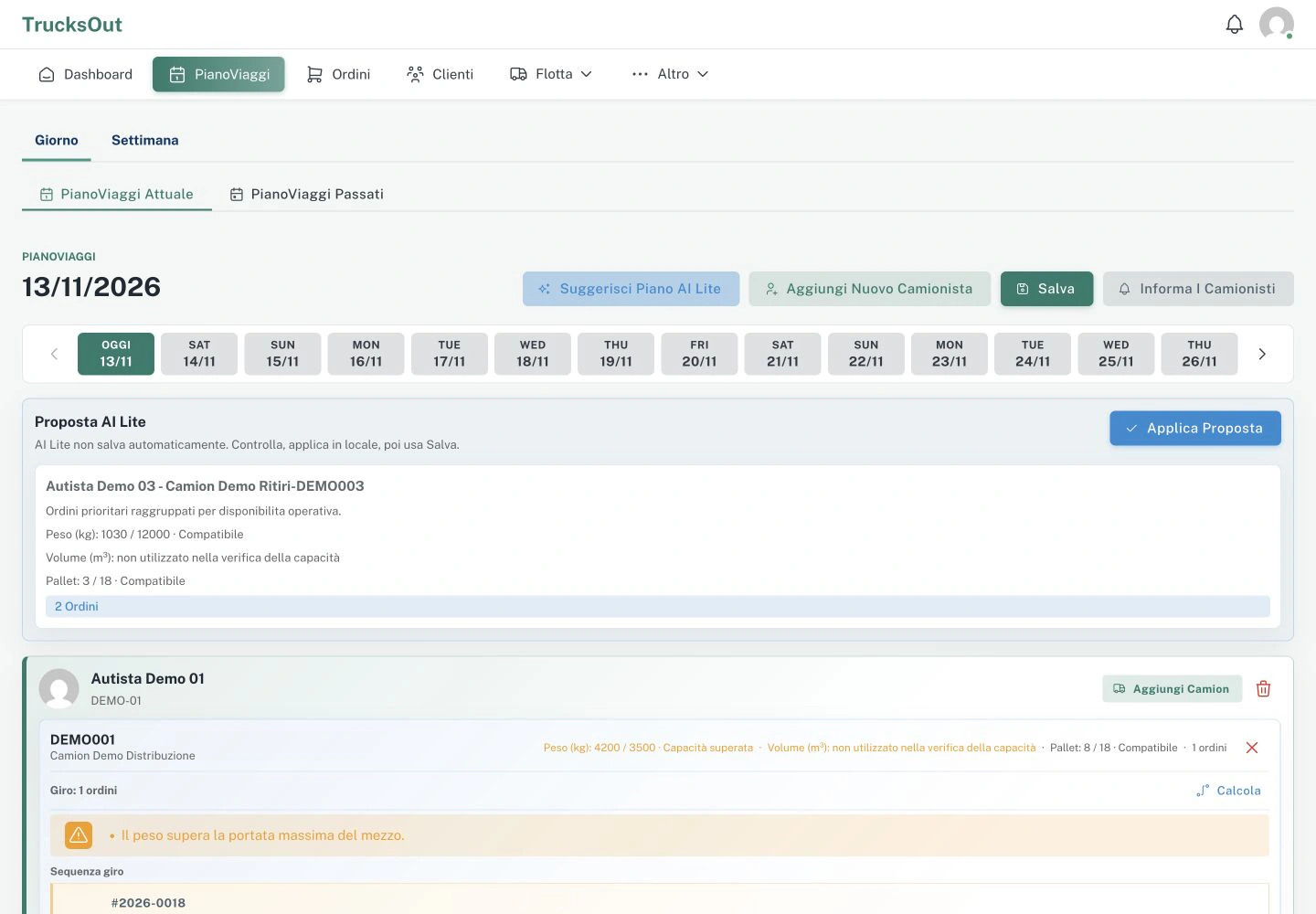
Which information to start from
An operational plan starts with data already in the management system: orders to handle, available trucks, drivers and activities already assigned. Keeping this information in the same workflow reduces the need to reconstruct context from spreadsheets, chats and memory.
Why an initial proposal can be useful
An assisted proposal should not be interpreted as the definitive plan. Instead, it can do the preliminary work and leave the dispatcher the most important task: checking the real case, correcting assignments and deciding what to save.
Control must remain with the dispatcher
Daily planning has exceptions that are not always represented in the data. A particular customer, an operational preference, a last-minute change or knowledge of the area may make it necessary to edit the proposal. This is why the final plan must remain under human control.
When the plan becomes more useful
The initial proposal gains more context when it is read alongside other operational information, for example the estimate of time needed for the trip and the hours recorded for the driver. This does not mean automating every decision: it means having more elements in one place before deciding.
Note: TrucksOut helps organise operational information and activities. The estimates and information shown do not replace mandatory tools, company checks or responsibilities under applicable regulations.