
Vehicle availability and driver availability are different information
When hours are managed in separate spreadsheets, messages or memory, the dispatcher has to reconstruct the context while already organising orders and trucks. Collecting this information in the same operational workflow makes it easier to consult during planning.
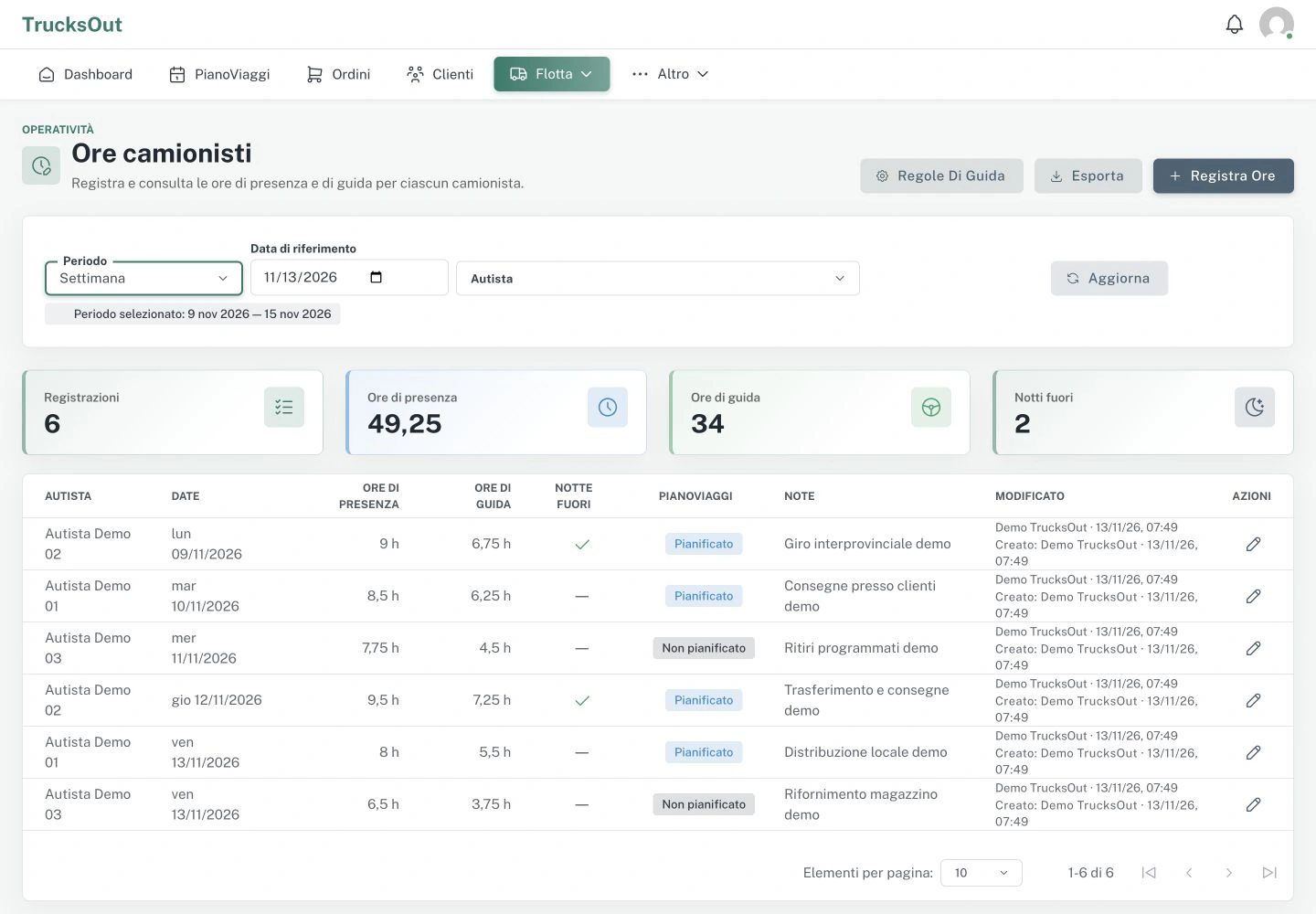
Which information does the dispatcher need?
To organise the day, it can be useful to have a reference for attendance and driving hours recorded for the driver. The value is not to create an isolated archive, but to make information available when assignments are being built.
Update information close to the people who produce it
If the driver can enter or update their own hours from the app, the information can enter the operational workflow without necessarily requiring a second step in a separate spreadsheet. The dashboard remains the dispatcher's consultation point.
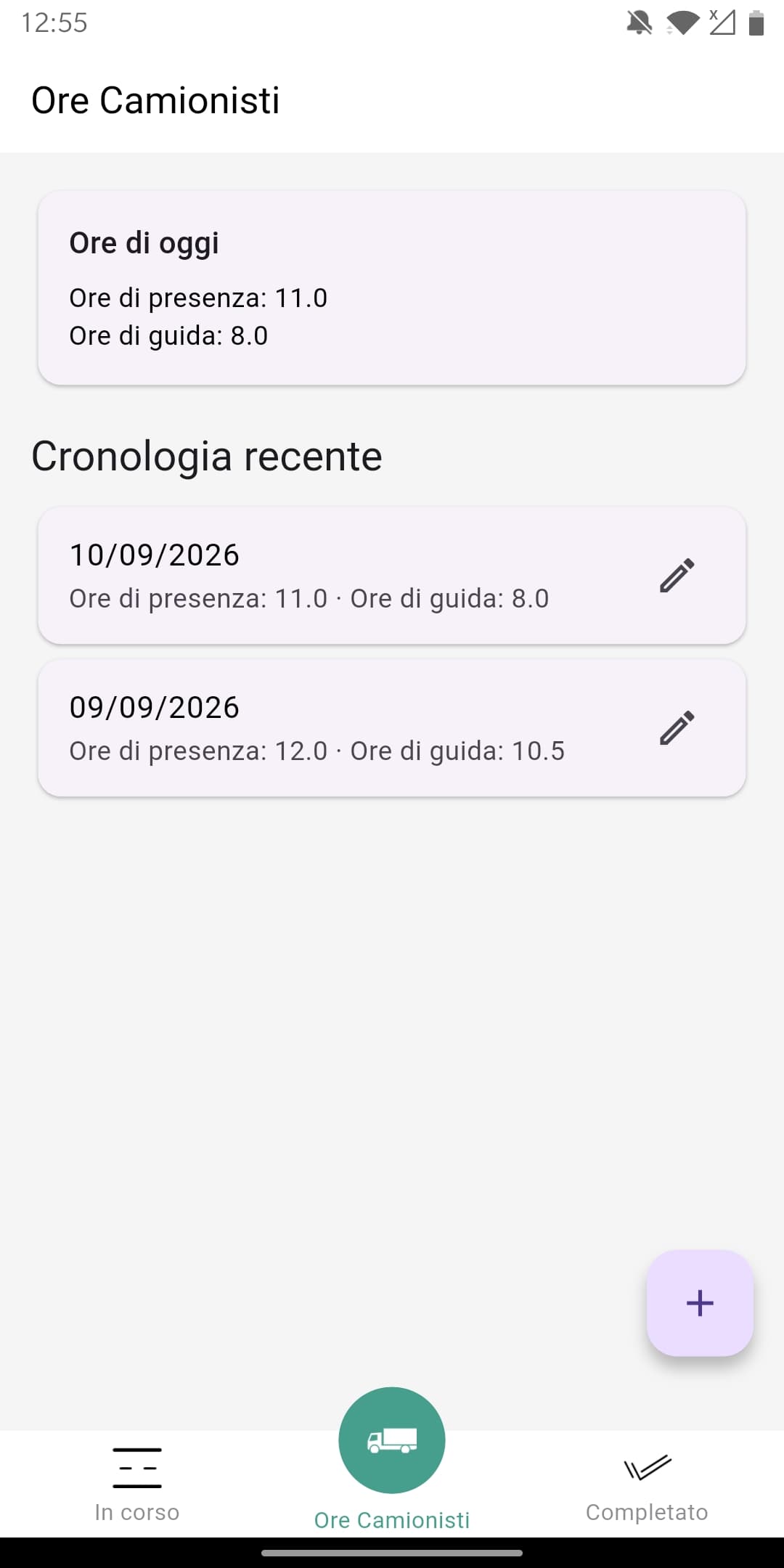
Use hours as support, not as certification
An operational management system does not replace the tachograph, mandatory tools, company controls or regulatory checks. Recorded hours help organise information and activities; compliance with rules remains the responsibility of the obligated parties under the applicable regulations.
Link hours and the trip estimate
An indicative travel-time estimate gains more value when read alongside the driver's situation. They are different pieces of information, but both help the dispatcher understand whether a proposal deserves to be reviewed before saving.
Note: TrucksOut helps organise operational information and activities. The estimates and information shown do not replace mandatory tools, company checks or responsibilities under applicable regulations.