
Two trips with the same number of activities can require very different times
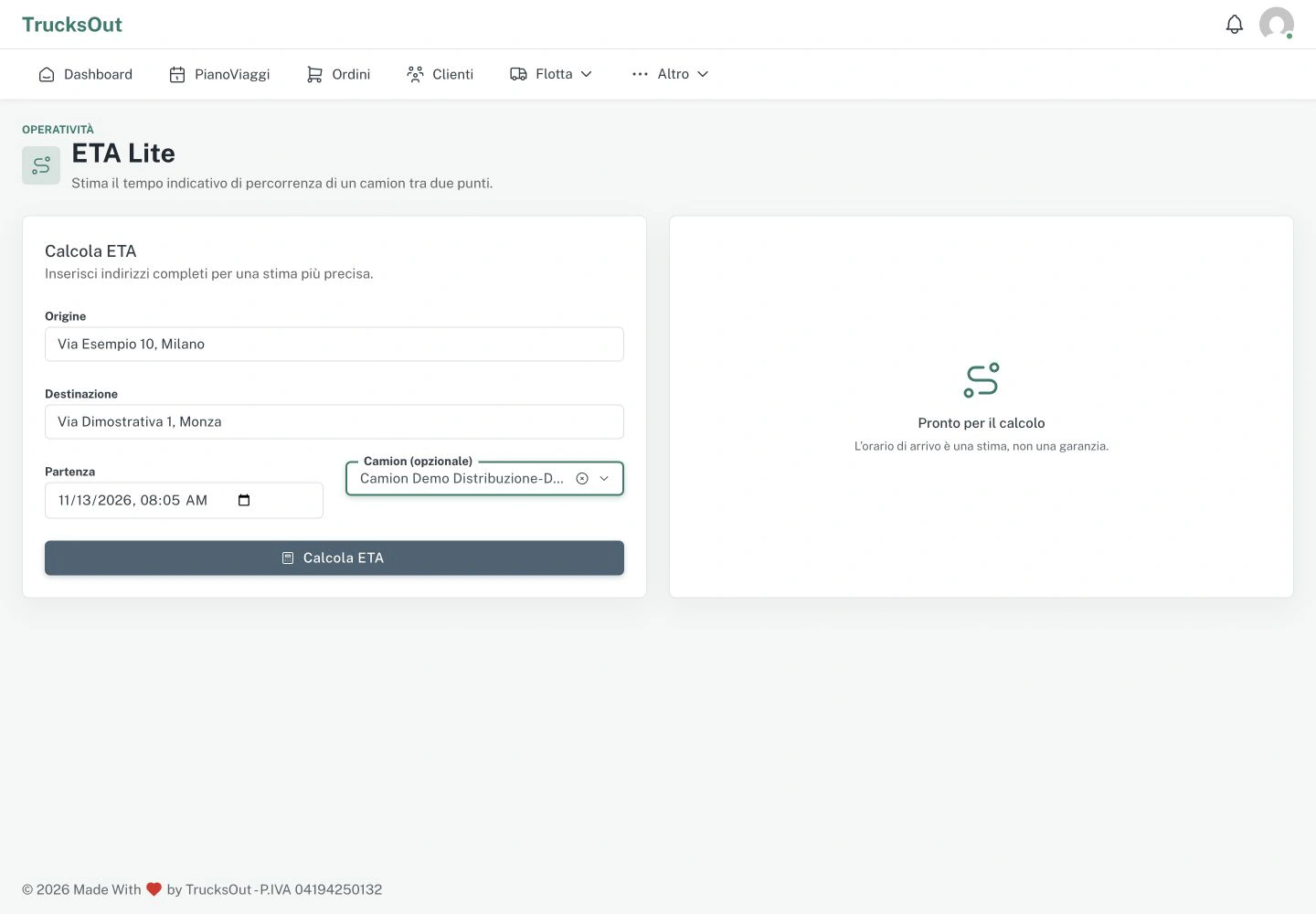
Five pickups concentrated in the same area are not equivalent to five activities spread over hundreds of kilometres. That is why, during planning, it can be useful to pair the activity sequence with an indicative estimate of total travel time.
Why the sequence matters
Changing the order of pickups and deliveries changes the route. Even without seeking automatic optimisation, being able to compare the planned sequence with a trip estimate helps the dispatcher identify unrealistic combinations before confirming them.
An estimate is not a promise of arrival
Traffic, stops, waiting at customers, detours and unforeseen events can change the actual duration of a trip. This is why a travel estimate should be used to support planning, not as a guaranteed arrival time.
Recalculate when Trip Planning changes
The operational day changes often. If a new pickup is added or a delivery is moved, the estimate must also be able to follow the new sequence. The value is having the reference inside the same workflow where the plan is changed.
Travel time and availability are not the same thing
Knowing that a trip takes an indicative number of hours does not automatically mean the driver can carry it out. The route estimate and information on driver hours are two distinct levels, which become more useful when they can be consulted together.
Note: TrucksOut helps organise operational information and activities. The estimates and information shown do not replace mandatory tools, company checks or responsibilities under applicable regulations.